
- Client
- Green Sol Chemical
- Location
- Denver, CO
- Scope
- Industrial security · Commercial security camera systems · Commercial security
Most industrial sites already record a great deal of video. The gap is timing: footage shows what happened after the fact, when the useful moment has passed. A camera that only answers questions after an incident leaves the first few minutes of the response to whoever happens to notice.
Green Sol Chemical wanted the camera system to work as a safety layer, flagging a spill or a leak as it appears in an environment where steam, machinery and cleaning crews are in constant motion.
The installation
The photographs below are from the completed job. They show the camera positions and how each housing sits against the surface it was mounted to.
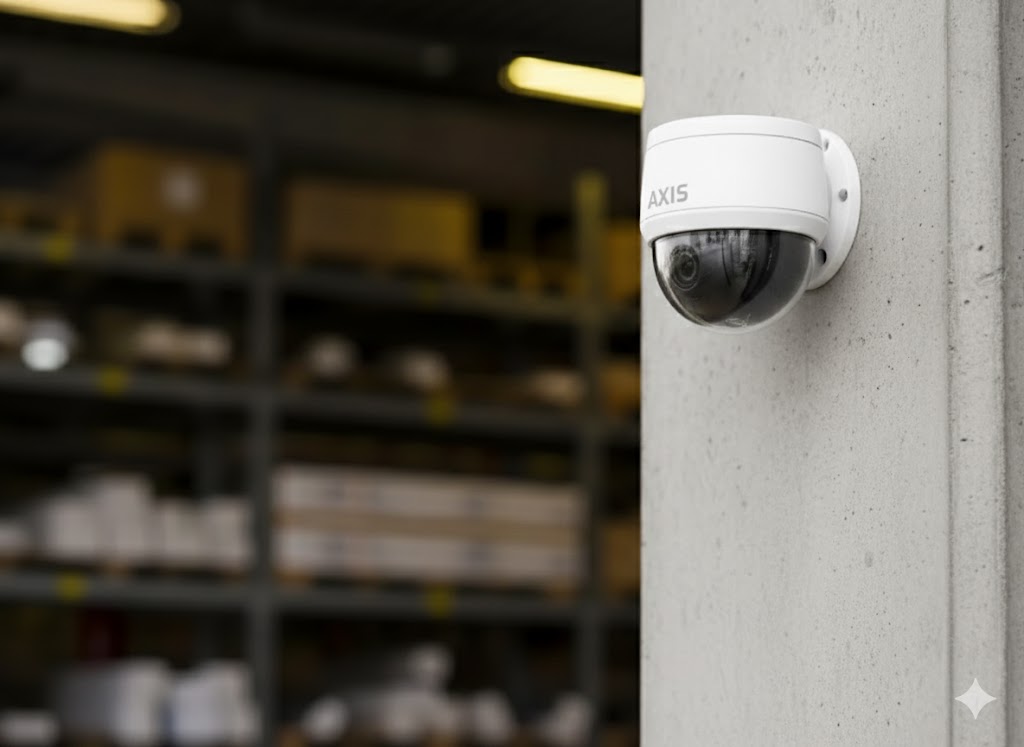
The installation An AXIS M42 dome over a high-risk area of the plant, positioned to watch the floor for liquid pooling.

1 of 1
Footage that only confirmed the incident
The facility handles hazardous material, so containment is a matter of speed. The previous system recorded clearly enough, but it answered questions after an event rather than during one.
Motion detection could not close that gap. On a chemical floor, movement is normal, and alerts created by steam or a cleaning crew train staff to ignore the system that is supposed to protect them.
Analytics running on the camera itself
The AXIS M42 dome cameras run the analytics on board rather than sending every frame to a server. Detection happens at the edge of the network, so the alert is not waiting on bandwidth or on a central processor.
We calibrated the detection for liquid pooling on the floor and for the difference between a spill and a wet floor after cleaning. That calibration is what keeps the system useful instead of noisy.
Mounts that absorb machinery vibration
The cameras sit in a working plant, so the mounting had to cope with vibration that would blur a normal wall fix. We used mounting hardware selected to absorb it and hold the image steady for the analytics.
The cabling runs in conduit as well. Industrial-grade structured cabling inside protective conduit keeps the network out of reach of chemical exposure and mechanical damage.
A gateway into the building system
The building management system was older than the cameras and did not speak the same language. The site needed a camera alert to trigger a real response, not a notification on a screen.
We used the camera API and added a local gateway that translates an alert into a signal the legacy BMS accepts. A detected leak can then start the ventilation and door sequence the site has already defined, without waiting for a person to see a notification.
Coverage of tanks, piping and loading
The cameras watch the high-risk parts of the facility: tanks, piping runs and the loading area, where a spill would spread before anyone reached it.
The design goal was modest and specific. The system should notice the event early, hand it to the systems that respond, and keep a record of what the camera saw.
Nothing here changes the process itself. It changes how quickly the plant learns that something is wrong.
Related:All projectsContact us