
- Client
- CEVA Logistics
- Location
- Denver, CO
- Scope
- Industrial security · Access control solutions · Commercial security camera systems
Freight does not stop for an install. A working warehouse is a building with dock doors opening all day, forklifts crossing each other, and pallets staged in whatever space is free that hour. Any camera plan has to survive that traffic, and any access control has to be quick enough that nobody props a gate open to get through it.
The work here was as much about mounting and containment as about the hardware: exterior devices on a wall that takes weather, and interior gates that take impact from equipment and people leaning on them.
The installation
The photographs below are from the completed job. They show the camera positions and how each housing sits against the surface it was mounted to.
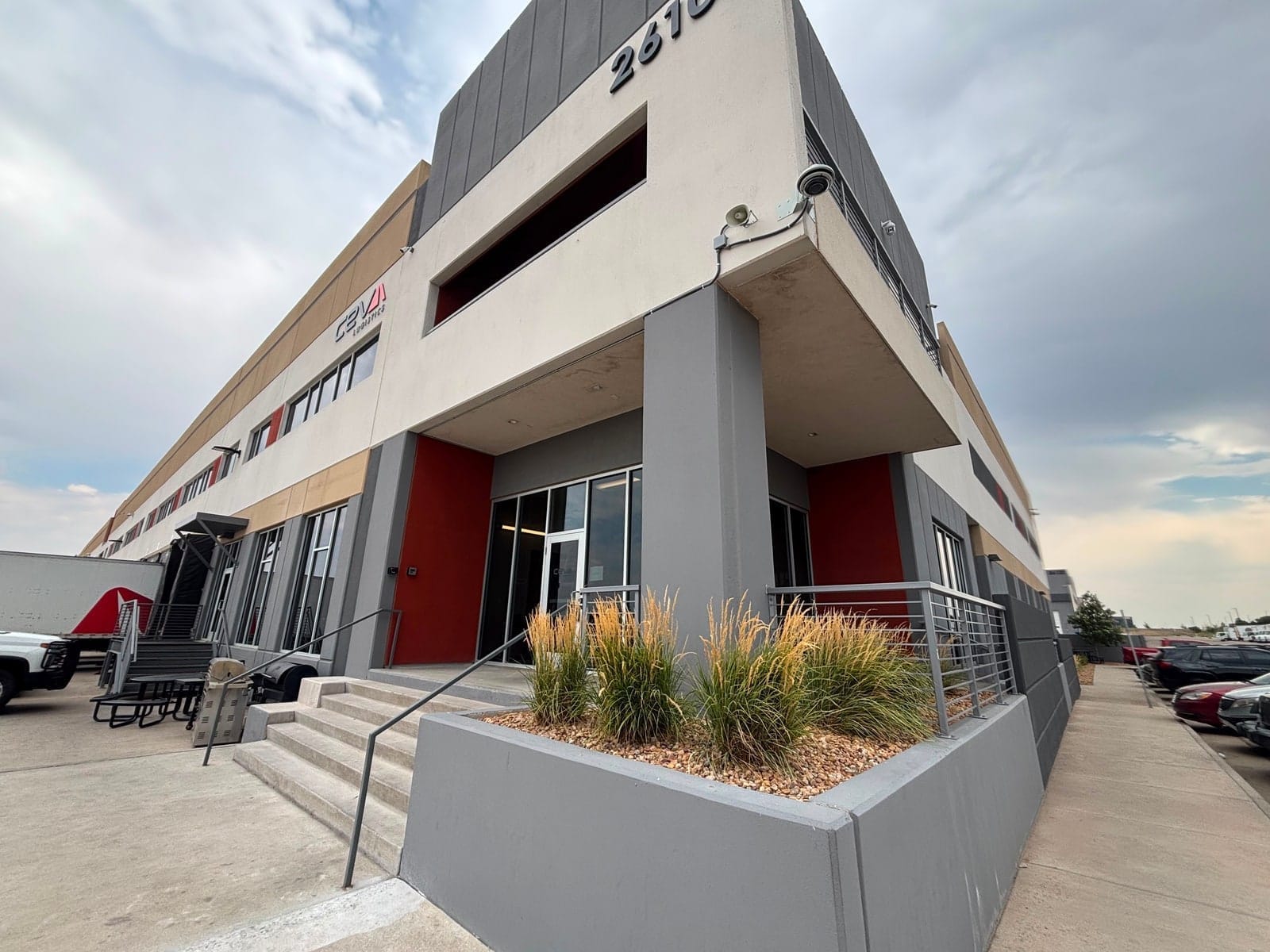
The installation The building corner: camera and speaker on the same wall, with the run contained rather than clipped to the façade.
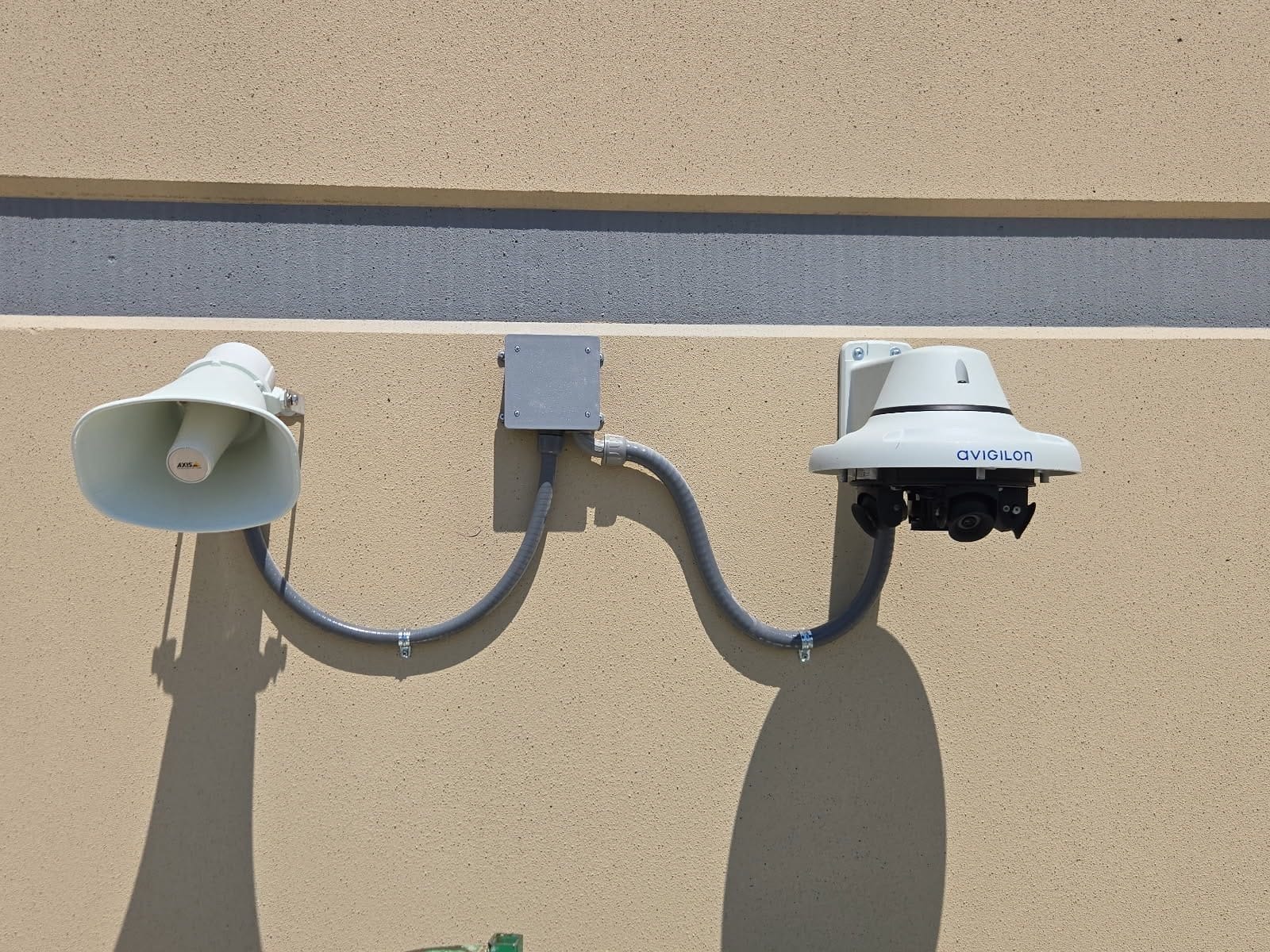
The installation The pairing that does the work on the perimeter — a multi-sensor for the view, a horn for the response, one conduit between them.
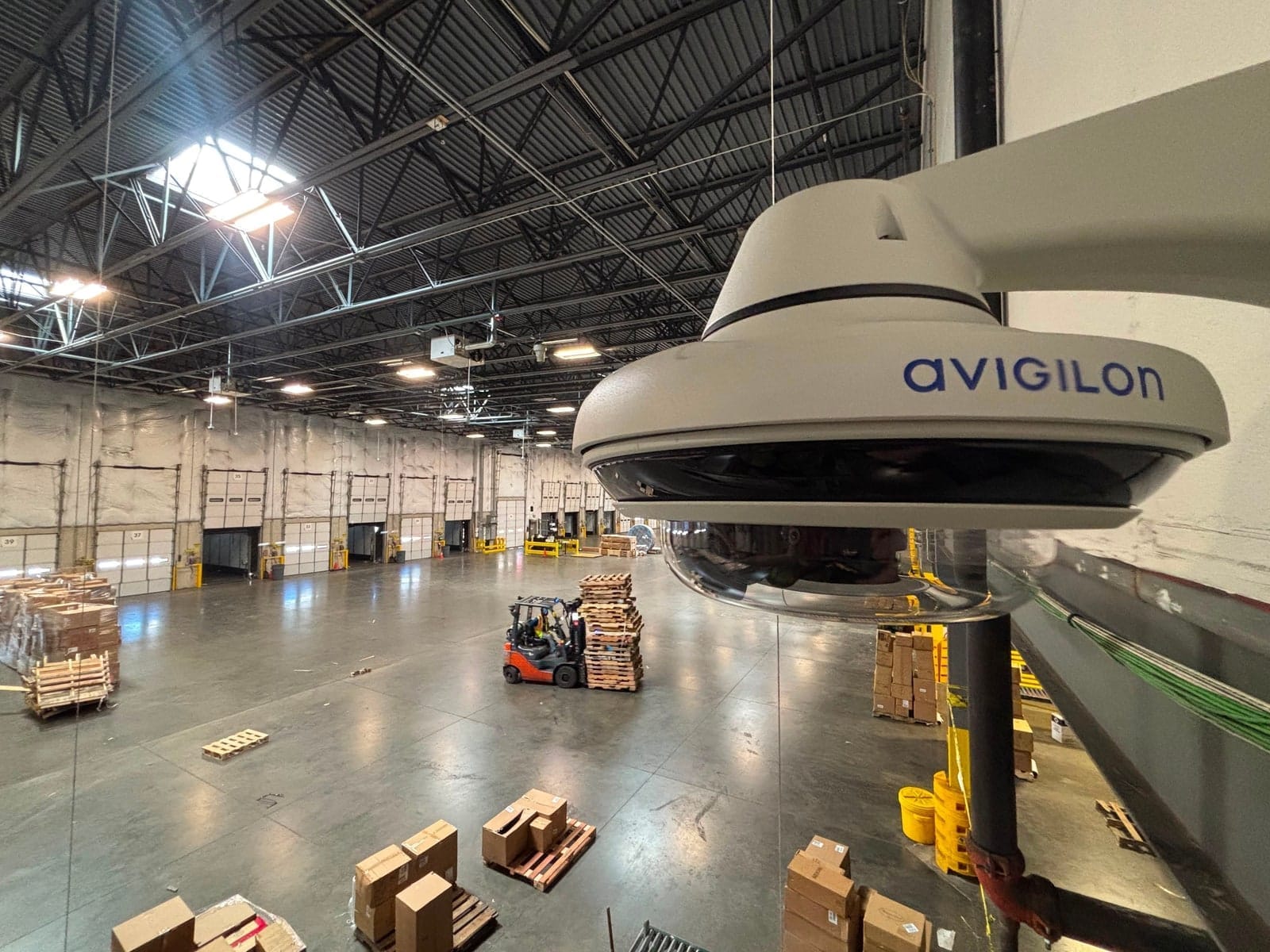
The installation Inside the warehouse: the same camera family over the working floor, where dock doors and racking break up every sight line.
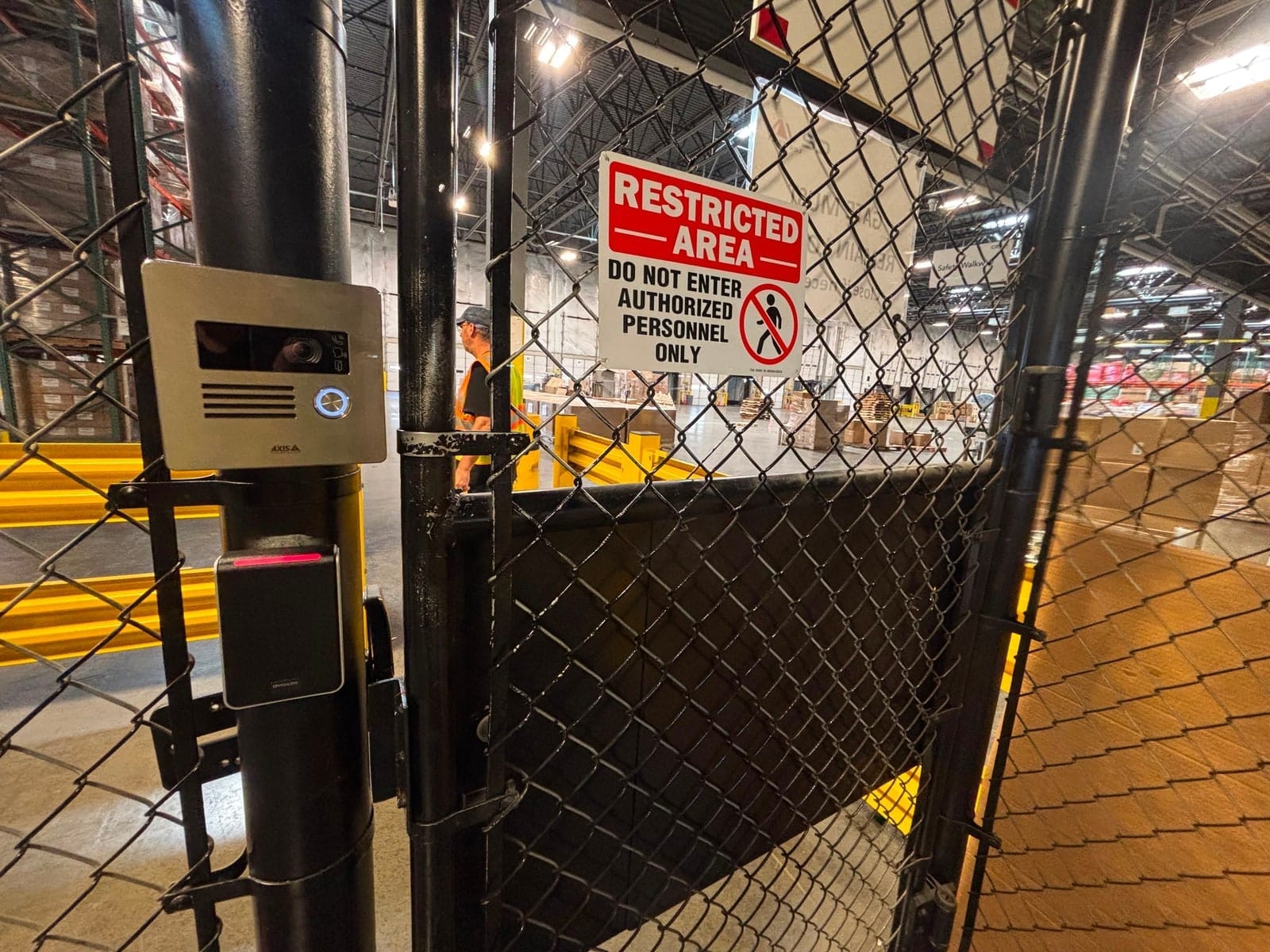
The installation The restricted gate: intercom above, reader below, both fixed to the fence frame so the gate hardware does the work.
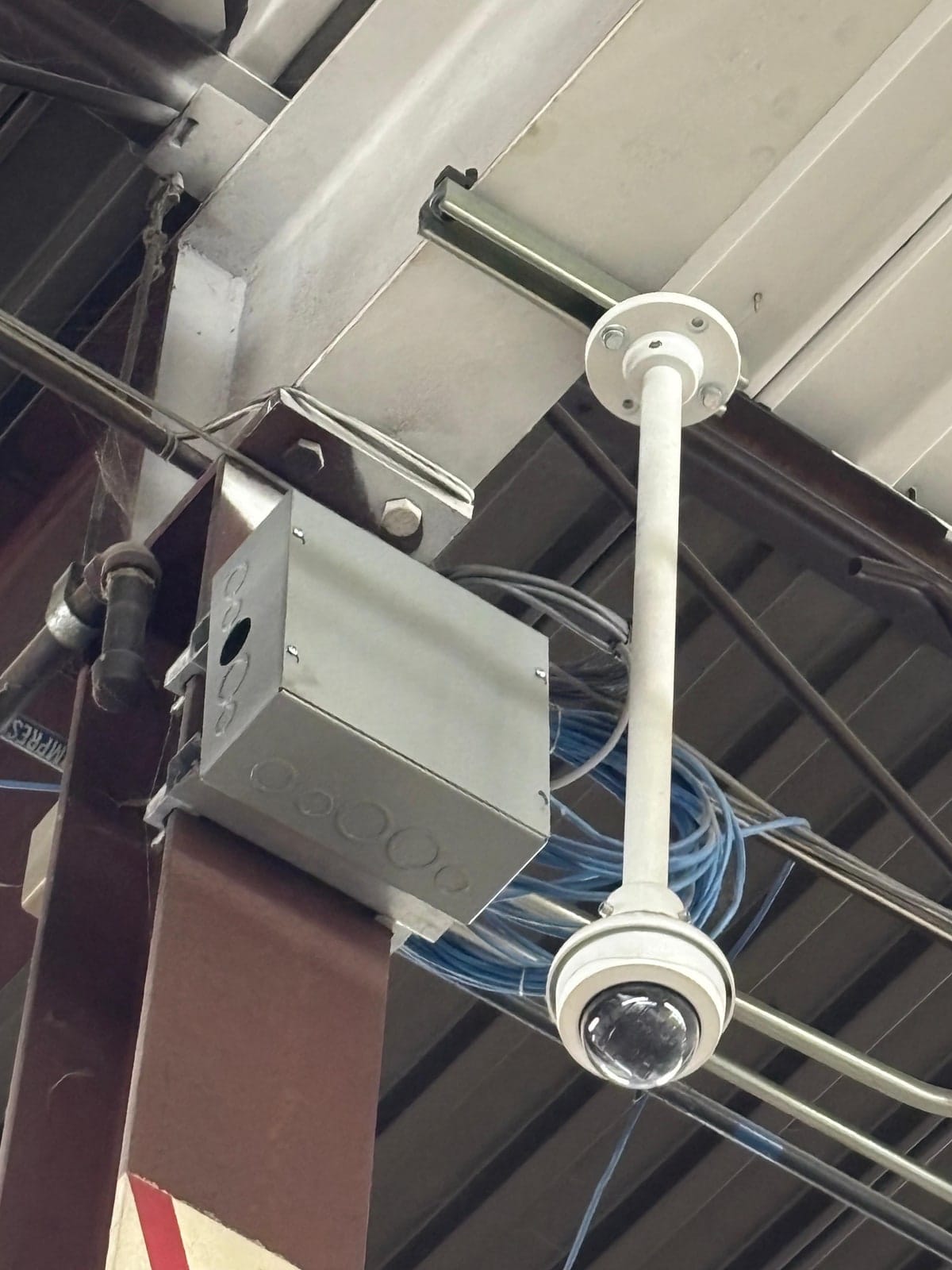
During the work During commissioning: the pendant drop and junction box, with the cable bundle dressed before the ceiling was closed up.
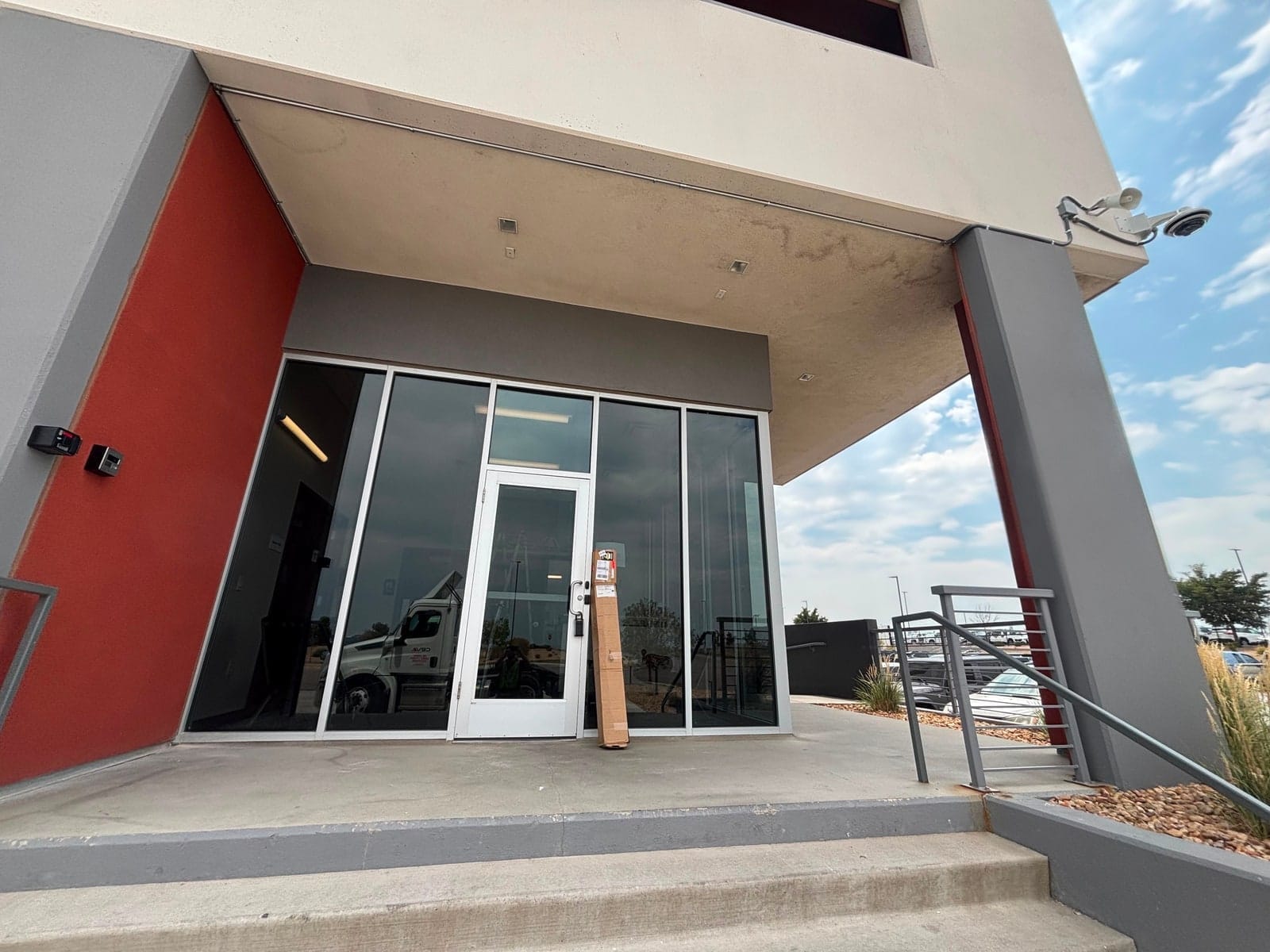
The installation The staff entrance, where the reader and the camera cover the same opening from different heights.


1 of 6
The exterior had to see and be heard
The building perimeter is covered by Avigilon multi-sensor cameras, which put several independent views in one housing and one cable run. On a long wall that matters: one mounting point covers the dock face, the corner and the approach instead of three separate cameras and three separate penetrations.
Each exterior camera is paired with an outdoor horn speaker. The speaker is the part most warehouses ask for after the first incident, because an operator who can see someone at the fence can also tell them to move on without walking the building. Audio is a deterrent on the perimeter; the recording is what settles a dispute later.
- Multi-sensor cameras on the exterior wall and corners, aimed along the building rather than across it.
- Outdoor horn speakers co-located with the cameras so the operator and the voice are in the same view.
- Liquid-tight flexible conduit and industrial cable management on every exterior run.
Restricted areas needed a real gate, not a sign
Inside the building, the client separates restricted stock from the general warehouse floor with chain-link fencing and gates. A sign is not a control, so each gate was fitted with an Axis IP video intercom and an Avigilon card reader, mounted directly onto the fence framework.
The intercom lets someone at the gate be seen and spoken to before it opens, which is the difference between a controlled area and a locked one. The reader makes the entry a credential event with a time and a name attached, so the restriction can be reviewed after the fact rather than argued about.
Mounting is the part that lasts or fails
Everything on this site is mounted for abuse and weather: liquid-tight flexible conduit with the correct glands, boxes fixed to structure rather than to cladding, and cable dressed and supported instead of hanging from a connector. On the ceiling, cameras sit on pendant arms with the junction box accessible but clear of lift traffic.
The penetrations are sealed and the runs are routed where they will not be hit. A warehouse is a hostile environment for anything a pallet can reach.
What the operator has now
The yard, the dock face and the approach are covered by cameras that share one housing and one path back to the recorder, with audio available from the same platform. Inside, the restricted gates are credential-controlled and intercom-supervised, and every entry is logged.
That combination is the point: perimeter devices that deter, interior gates that actually control, and one design language across both so the system is maintained as a system rather than as a pile of parts.
Related:Industrial securityCommercial security camera systems
Related:All projectsContact us